Window Peeper Prompt: Two Five-Beat Video Examples
 Window Peeper editorial team
Original window peeper prompts for a burger scene and a noodle scene, with outside-window framing, a reaction and a final curtain close.
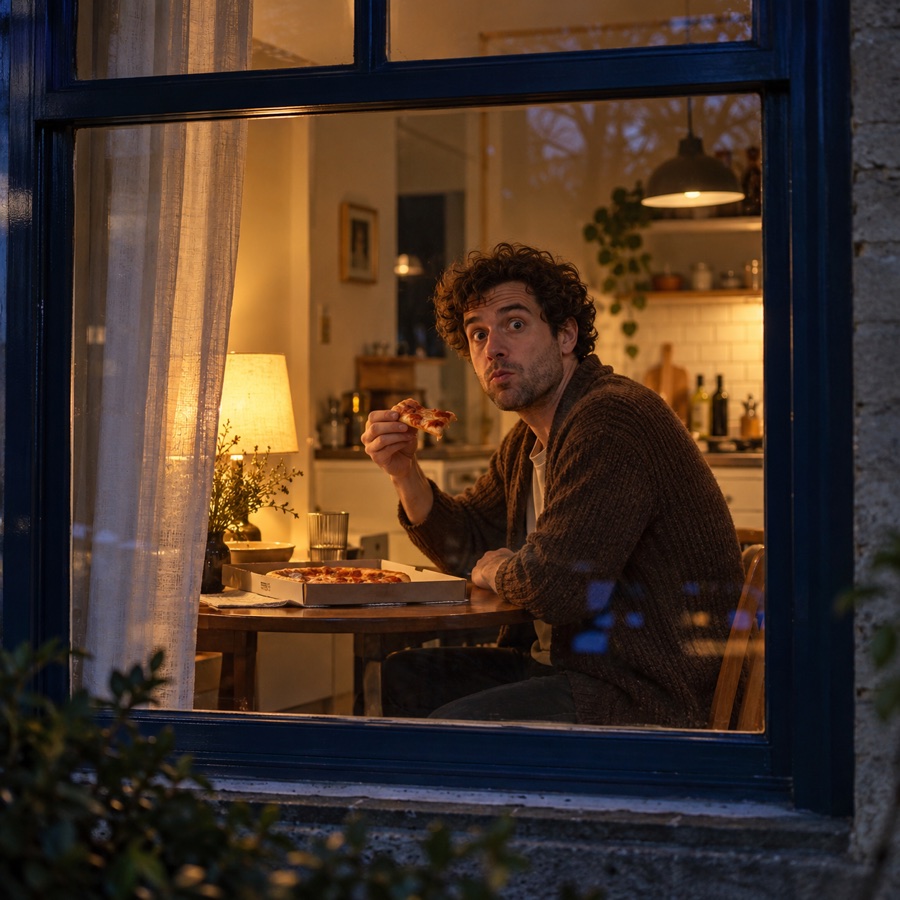
A useful window peeper prompt explains where the camera is, what the person is doing and when the curtain closes. It needs a small sequence of visible actions. “Make a viral window peeper video” gives the model little physical direction, and a list of quality words does not tell it how to end the scene.
The examples below are original shot plans for a 10-second clip. They are starting points for experimentation, not tested guarantees of exact movement, likeness or timing. Use an authorized reference image of one adult. Keep the camera outside, let the person notice it partway through and reserve the curtain close for the ending.
A prompt structure you can reuse
Start with the spatial arrangement: a stable camera outside a window, a visible frame, open curtains and a person inside. Then add one prop and one ordinary activity. Describe the first glance toward the camera as a change in attention. Give the subject one readable reaction and one simple action to finish.
After that sequence, add a short constraint about continuity. The room, face, clothing and prop should stay consistent, and the camera should not pass through the glass. Constraints can help communicate intent, but they are not guarantees. Long lists of forbidden errors can also distract from the central action, so focus on the two or three problems that matter most to the scene.
Example 1: burger, surprised glance, curtain close
This version uses a warm room and a small embarrassed reaction. The burger explains the activity without needing dialogue. Holding it near chest level leaves the face visible and makes it easier to separate the eating beat from the curtain action.
Create a 10-second vertical scene using the consenting adult in the reference photo as the main subject. The camera is outside a closed window at eye level, with the window frame visible at both edges. Warm room light, gentle glass reflections, curtains open.

0-2 seconds: establish the person seated inside, holding one burger near chest level, unaware of the camera.
2-4 seconds: the person takes a small bite and lowers the burger slightly, keeping their face visible.
4-6 seconds: they notice the camera outside and pause, looking toward it.
6-8 seconds: a brief surprised, embarrassed smile; the free hand reaches for the nearest curtain edge.
8-10 seconds: they draw that curtain across the window until the view into the room is covered.

Keep one continuous shot. The camera stays outside and does not pass through the glass. Keep the person, burger, clothing and room visually consistent. No extra people, captions or scene changes.
If the bite produces unstable mouth or hand movement, replace it with “looks down at the burger, then looks up.” That changes one difficult action without removing the story. If the curtain becomes a new object halfway through the clip, mention its position in the first line: for example, hanging at the subject’s left side.
Example 2: noodles, interrupted dinner, curtain close
A noodle scene introduces a bowl and chopsticks, so it asks the model to manage more detail. Keep the bowl on the table. A small lift of noodles is easier to read than a dramatic slurp or a fast gesture across the face. The pause should happen before the hand reaches for the fabric.
Create a 10-second vertical scene based on the consenting adult in the reference image. View from outside a closed apartment window. The camera remains still at eye level. A visible window frame surrounds a warmly lit table; a single curtain hangs open beside the subject.

0-2 seconds: the person sits at the table with one bowl of noodles, focused on dinner.
2-4 seconds: they lift a small portion with chopsticks, keeping the bowl on the table and the face unobstructed.
4-6 seconds: they notice the viewer outside the window and stop the eating motion.
6-8 seconds: they lower the chopsticks beside the bowl, then give a short, puzzled glance toward the camera.
8-10 seconds: one hand pulls the existing curtain across the window, covering the room as the shot ends.

One person, one bowl and one uninterrupted shot. Keep the camera outside the glass throughout. Preserve consistent clothing and room layout. Do not add dialogue, subtitles, extra limbs or a second window.
If utensil continuity becomes a problem, remove the lifting action. The person can simply sit beside the bowl before noticing the camera. You preserve the dinner context while reducing the number of objects that must move together.
Change one variable between attempts
Keep a copy of the prompt you submitted and a short note about the result. “Camera moved inside at the end” is useful feedback; “needs to look better” is too broad to guide the next attempt. Change the camera instruction first, then review again before changing the lighting or activity.
Avoid adding several new requirements to solve one problem. For example, a failed curtain close rarely needs a different lens, elaborate rain, dramatic lighting and faster motion all at once. Simplify the last action and clarify where the existing curtain starts. Each new paid generation can vary even with the same prompt and photo.
Before generating or posting
Check the currently supported duration and format in the generator; the 10-second breakdown here describes a creative plan. It does not override service settings. Review the one-time pack prices, use only images you have permission to upload and label realistic results as AI-generated when sharing them.
For source-photo advice and a practical review checklist, use the window peeper tutorial. If you want to understand why the window, reaction and curtain matter, read the effect explained.